
Tal Anderson Talks The Pitt, Autism Representation, and Storytelling

Tal Anderson has built a career around telling stories that challenge assumptions and widen the lens of representation. Audiences may recognize her as Becca King on the critically acclaimed HBO Max series The Pitt, where she plays the twin sister of Dr. Melissa “Mel” King (Taylor Dearden) opposite Noah Wyle. As the show’s second season continues airing through April, Anderson’s performance brings nuance, dignity, and authenticity to a character rarely portrayed with such care on mainstream television. Beyond acting, Anderson is a filmmaker, editor, and writer whose work consistently centers on inclusion - both on screen and behind the camera.
That commitment to storytelling also extends to younger audiences. This April, during Autism Awareness Month, Anderson will release the second installment of her children’s book series, Oh, Tal! Not Like That., continuing the story of a young girl who learns that there are many different, and equally valid, ways to approach the world.

As an advocate for the autistic community and an ambassador for organizations such as Awareness Ties and Disability Voices United, Anderson uses her platform to push for meaningful change in Hollywood while reminding audiences that authentic representation begins with listening to lived experience. In the conversation that follows, she reflects on portraying Becca King, the responsibility of visibility, and the power of storytelling across mediums.
Playing Becca King, as Mel’s twin and as a young autistic woman living in a care facility, comes with a lot of nuance. What parts of her story feel especially personal or important to you to portray authentically?
As an actor, it’s always my responsibility to portray a character as authentically as I can. As a disabled actor, in particular, though, everything about Becca is important because we don’t get the opportunity to see someone like her onscreen very often, and I feel a lot of responsibility over that. It’s very important to me to portray Becca as an adult, with dignity, and to highlight the sparkle of independence I see in her from how she is written into her scenes.
Unlike Becca, I live independently, but I only do so with support from a lot of people, including my family, and the most important part of Becca’s story, regardless of the details, is that she is fully supported for who she is, and her desire to live a happy and fulfilled life in every way by her support system. We have this in common. Becca doesn’t live where and how she does because someone has decided that this is the only way she can exist. She and Mel decided together that this was the best option for her to be able to live the life she wants to live and to be happy. It’s a detail that most people overlook, but being part of making decisions about your own life as an adult should be the reality for everyone, and unfortunately, for many disabled adults, this is not the case.
Mel and Becca’s relationship is not only authentic, it’s the best example of how respect, love, and support can create a mutually successful relationship like this, and it means everything that Mel knows this, and protects Becca’s dignity and embraces her independence.
As an autistic actor playing nuanced roles in mainstream television, how do you navigate the line between visibility and responsibility? Do you ever feel the weight of being “the representation” in the room?
Actually, I do feel that weight. I feel like that’s not unique to me, though, or just because my character is disabled. I think all actors feel that responsibility. My acting coach, Daniel Travis, told me once that my job as an actor was to defend my character’s right to exist, and I try to remember that every time I read a script. So, that means I try not to judge or force any kind of preconceived ideas on my character. I try to come from a place of respect for who she is, first, and that helps me with the pressure of trying to represent a whole community by playing one woman in one show.
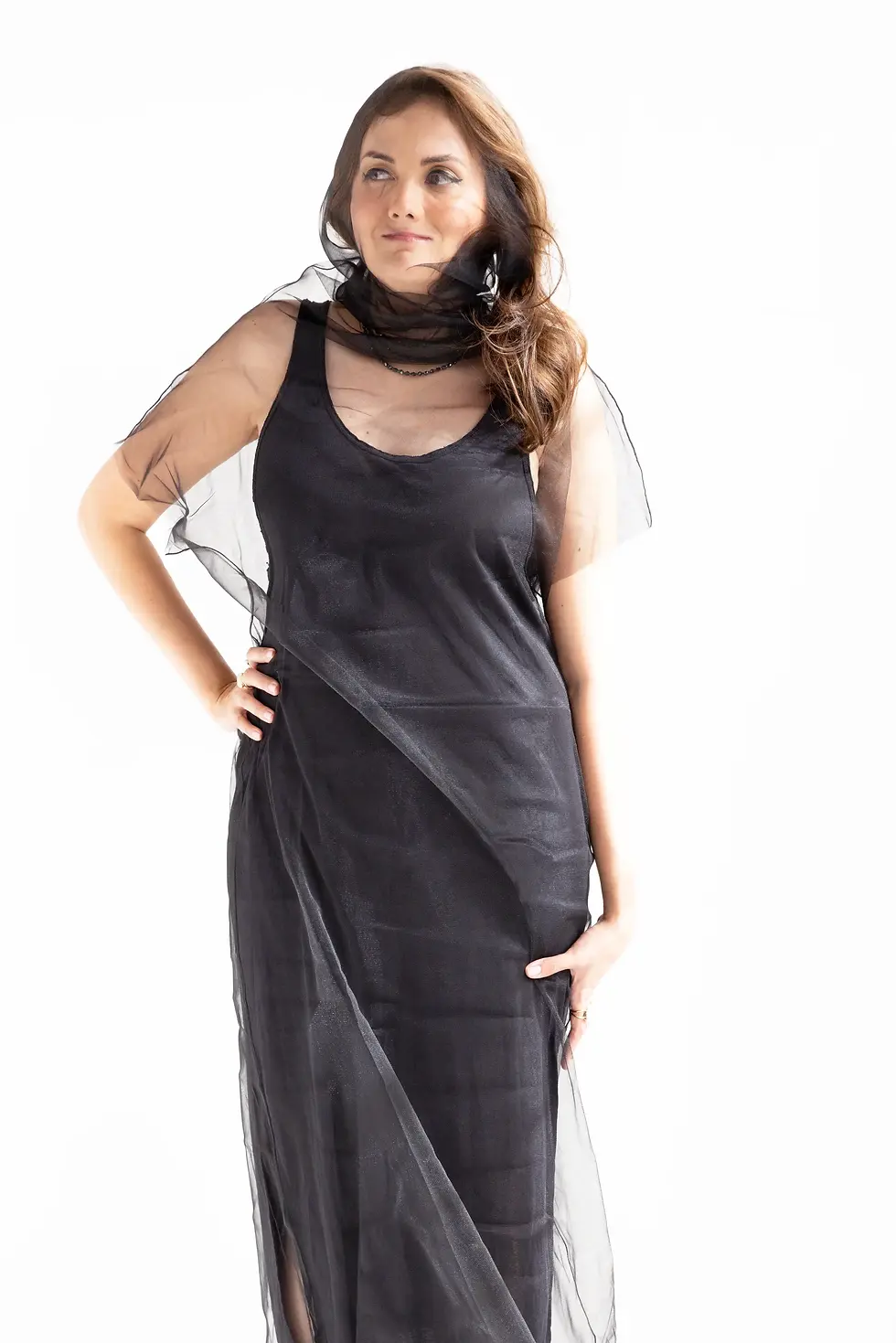
Defending her right to exist as she is means that I do right by Becca in every way possible. And if I’m successful in doing that, and can authentically show people who Becca is at her core, then I’ve done my job representing our community. Otherwise, that is really putting unfair pressure on Becca!
Oh, Tal! Not Like That. continues your journey of showing children that there are “more ways than one to get things done.” Why was school the right setting for this chapter of Tal’s story?
I chose school for the setting of the second book because, as a small child, much of the pressure to be something other than myself came from being in a school environment, and it was soul-crushing. As an adult, I understand now that teachers have a tough job, and it’s hard to teach 20 kids unless they can all learn the same way. But for me, as a neurodivergent kid, it just felt like everyone was telling me that everything about me was wrong, simply because my brain went about tasks in a totally different way.
I wanted to center this book around the personal lived experience of both myself and Michael Richey White, the illustrator, because we shared these experiences as autistic, creative kids in school. For kids like us who have had similar experiences, we wanted to show the school environment with a positive outcome to reassure them that doing something in a different way doesn’t mean that it’s wrong.
You mention that as a child, what others saw as chaos felt like joy to you. How did that early experience shape the kind of stories you feel called to tell today?
As a kid, my mind moved so fast, and I took in a million things at once, especially when I was in an environment that really appealed to me. I didn’t realize that to others, this looked like me running around without direction. Inside my mind, I was rapidly taking in information and storing it pretty much forever in the file cabinet inside my brain to be used at a later date. I was fascinated by so many things, and so focused on the details of everything. Where most kids would “like” a certain Disney movie, I would watch it, and immediately be on the computer researching every detail. I knew the voice actor and singing voice of every character, who wrote the lyrics, who the composer was, and the names of the animators. I would watch my favorites over and over, but I’d also memorize every line, and force my siblings to act out scenes with me in front of the screen, pulling props from all over the house. Then I'd write scripts on my computer with those same characters, inserting myself and other characters I liked into the story. I’d then record all of the lines onto a little handheld Panasonic voice recorder, and then combine them in order of the script onto a second voice recorder. I realize how intense that sounds, but to me, a child, that’s what “liking a movie” meant.

Today, I'm still doing those things, but as a professional. I’ve been a storyteller my whole life. Those things I did as a kid developed into my acting career, my freelancing as a film editor, writing scripts, producing my own films, and now into these books I’m collaborating on. Everything I am today as a storyteller was shaped from the things I did as a child and how I viewed the world.
You work both in front of the camera and behind it, as an actor, filmmaker, editor, and even now a children’s author. How does storytelling shift for you across mediums, and where do you feel you have the most power to influence representation?
As an actor, my job is to bring life to a character that was written by someone else, but in many ways is also was created by me as the performer. Giving that character life and perspective is a very significant contribution to the story, which is why the same story can feel so different when the same roles are performed by different actors.
As an editor, I make choices at every step, and each of those choices changes the story. Sometimes slightly, and sometimes significantly.
I view writing and producing my own films as very similar to writing my books. Different audiences, obviously, but my role in the storytelling is similar. The difference is mainly that when I produce my own films, I’m usually writing, acting, and editing the film, which means I’m influencing the story in 3 different ways along with the director and the cinematographer.
The children’s books are a collaboration in a simpler sense, because I’m writing the story and giving direction for the drawings, but the illustrator is the one bringing the story to life visually. In our case, it really helps that we’re both coming from the same lived experience, and also that Michael is so talented.
I think writers have the most power in general, and also, yes, to influence representation, whether it’s in print or in film. Which is why I’m constantly telling people when they compliment my performances (after I say thank you, of course), that although everyone’s role in a project is important, it’s the writers who create the narrative. I’m so grateful for the care and respect they give each and every character, and how hard they work to give them a voice, including Becca.
Autism Awareness Month often centers around education, but your work feels rooted in something deeper: belonging. What does authentic representation look like beyond awareness campaigns?

It actually has nothing to do with awareness campaigns. I think we’ve moved beyond that, and Awareness is just not enough anymore. Even Acceptance is not enough. For autistic and neurodivergent people to be safe and respected, the world needs to actively take steps to empower them, and that means more than just telling them or assuring them that they belong. It means reaching out and making friends with autistic people, and inviting them to join you in your adventures, your projects, and your businesses. I believe that if you actively include people through concrete steps and create real connections, the feeling of belonging will happen automatically.
You and illustrator Michael Richey White created the Oh, Tal! series as autistic creatives collaborating together. How important is it that representation exists not just in the characters, but in the creators behind the work?
I think it helps, first of all, because the audience we want to talk to shares our lived experiences. Michael is 25 years older than me, but when we met, we connected right away, and have so much in common. The audience we created the books for is 25 years younger than me. That’s a span of 50 years, and there are literally no differences in what we all experienced as children. I don’t think that someone who had not lived these experiences could effectively write about it. As for why it’s important, I think that kids need to know that there's nothing wrong with them, and knowing that this book shows them someone they can relate to helps to do that for them.
Knowing that it was created by the grown-up versions of these kids is even more important for the parents and teachers who see or read the book, because they need to be reminded that there are many different ways to do things, and that individuality is something to celebrate, not to squash. The strongest point to make, I think, is that Michael and I are successful at what we do, BECAUSE of our creative uniqueness, not DESPITE them.
Hollywood is slowly evolving, but systemic change takes time. From your vantage point, what progress feels real, and where do you think the industry still needs to push harder?
In my opinion, we were really starting to make some progress in Hollywood, but things have really slowed down. I don’t think this is because the understanding of the importance of representation has changed. (At least I hope it hasn’t). I think that for a while, Hollywood felt like the easiest and fastest way to be more inclusive of disability was to just include random disabled characters as tokens in every production. While this did give a lot more disabled actors the opportunity to be on screen, it kind of missed the point. I think true representation means reflecting on screen what exists in the world.
1 in 4 people in the U.S. have a disability, and based just on that data, disability is definitely not reflected accurately on screen. In my opinion, a good step in the right direction is turning on the TV and seeing it represented in the everyday life of the characters on screen, like it is in reality. The story doesn’t have to be about the disability, but disability has to exist in any story if we want it to be authentic.

I also feel very strongly about representing autism specifically across a broader spectrum, which is definitely more authentic. Again, this is why I love the way neurodivergence is written into The Pitt. In Hollywood stories in general, though, I’d really like to see more autistic people of color, characters who are non-speaking or who were diagnosed very late in life, and more non-binary autistic characters, because this would go a long way for authenticity in this community.
If a young autistic child watches you on The Pitt or reads Oh, Tal! Not Like That., what do you hope they walk away believing about themselves?
First of all, hopefully, if they’re watching The Pitt, they have a parent there to cover their eyes at the appropriate times!!!
But seriously, I would just want them to know that it’s okay to be who they are, even if that means you look or act different than everyone around you.
It’s really hard to feel good about yourself when you’ve been told your whole life that you need to change or hide your true self in order for other people to accept you. When you’re told that every day, eventually you start to believe it. If you’re not fortunate enough to have someone in your corner fighting for you, it can feel pretty hopeless, but even if only one kid reads our book, and says “hey! that’s me.” and feels better about themselves, or sees me on The Pitt and says “hey! she’s just like me,” and starts to believe that they don’t have to hide who they are to be happy and to be seen, then that makes me feel like I’m doing my job, first of all. It also makes me feel like I’m doing my younger self proud.
Photography by Ronnie Smith


I frequently play Sandbox Games to experiment with new ideas for building and design.
i really appreciated how tal frames representation as empowerment and actual inclusion, not just awareness slogans. the point about becca having agency in her living situation and mel defending her dignity felt huge, and it’s rare to see that written with so much care. also, the “defend your character’s right to exist” line stuck with me; it’s a solid way to dodge turning one performance into a whole community’s burden. weirdly, reading this reminded me of how intrusive unrelated links can feel on autism posts; i once saw https://playjackpotfishing.com/ dropped into a support-thread and it derailed everything. then another comment chain spiraled with https://playmegafishing.com/ and https://bigsmalldice.com/ showing up, which is exactly the opposite of the belonging she’s talking about.
The detail about Becca and Mel deciding together where Becca lives is the kind of nuance most shows never bother with but completely changes how the character lands. Tal's point that her success came because of her uniqueness not despite it is something that needs saying far more often. Came across a piece over at https://direwolfseo.co.uk/ on authentic disability representation which felt very relevant here. Really compelling interview throughout.