
O’Neil Thomas on 'The Shady Family,' Music and Building His Own Lane

Trying to put O’Neil Thomas into one box feels a little pointless. Actor? Yes. Comedian? Obviously. Writer, producer, editor, musician, fashion chameleon, professional internet troublemaker? Oh, for sure. At this point, O’Neil isn’t so much picking a lane as building an entire highway system, and somehow making it all look like one very entertaining joyride.

Millions may have first found him through the larger-than-life characters and impressions that fill their feeds, but lately, he’s been letting audiences see a few more sides of the person behind them. His viral The Shady Family universe has grown from a sketch into something with ambitions far beyond social media, while his covers of Labrinth’s “All for Us” and “When I R.I.P.” pushed him somewhere decidedly more vulnerable. Then there are the Bad Bunny videos, the Cowboy Carter fashion moments, and the kind of internet chaos that can somehow end with Duolingo joining the conversation. Basically, there is a lot going on in O’Neil World, and he seems perfectly happy that way.
So, naturally, we had questions. We caught up with O’Neil to talk about stepping out from behind his characters, the television shows that taught him the “formula of laughter,” why world-building sits at the center of nearly everything he creates, and what happens when your ambitions are simply too big for one medium.
Audiences are used to seeing you transform into characters, impressions, and heightened personalities. With your covers of “All for Us” and “When I R.I.P.,” there is less of a character to hide behind. What did it feel like to let your own voice carry the story, and what did music allow you to reveal that comedy has not?
It felt like a familiar vulnerability. It kind of sounds like a paradox, but that’s the most honest way I could put it. While I am used to telling a story depending on the height of the personality, it’s still me at the end of the day. This version, however, felt more vulnerable because it was more stripped down and intimate, which makes it all the more scarier but such a huge relief when it connects to my audience in the same way. Music showed me that I have to show up as myself authentically and not behind a character I created.
Euphoria is known for using music as an emotional language of its own. What was it about the series, and the world it creates, that spoke to you most, and why did “All for Us” and “When I R.I.P.” feel like the right songs for you to reinterpret?
There was an insurmountable amount of rawness that was the heartbeat of the series. There were moments that were sad, scary, gritty, ugly, and all the other facets that make us human. In a world where we constantly share the good about us, Euphoria showed us the bad that balanced each and everyone of us. That spoke to me. All for Us and When I RIP felt like the right songs to sing because I connected to them the most. When I RIP made me want to dance like no one was watching. My career constantly has me under a microscope, so there are so many times where I feel like I have to move carefully. That song makes me want to let my hair down and just DANCE freely, wildly, and openly, which I did in the music video haha.
All for Us was special to me because it was my spectacle. The visual direction had me at the edge of my seat from start to finish, and it evoked my creative being in a way I haven’t felt in a while. It was theatrical, attention-grabbing, and essentially a beautiful tragedy. I was drawn by the performance, let alone it being the ending of the first season. I think Labrinth was able to create the perfect closing song that wove the theme from start to finish.
You’ve also been working hard behind the scenes on The Shady Family, which you write, produce, edit, and perform largely on your own. What began as a sketch has grown into a much bigger world. When did you realize it could become something beyond social media, perhaps even a full series or film?
I actually realized the week I started producing multiple episodes. In all my creating career, I’ve never seen a response as widely received as my Shady Family series. It actually stemmed from a repost that I randomly decided to upload a year later because it was the end of the year and I couldn’t think of anything that day. It went viral last year, so I figured, “why not,” and tried again.
The only difference was that it went viral again, but this time hundreds of people were asking for a part 2. I never considered that before, so I decided to challenge myself and write a few more jokes, film it, and upload it. That went viral instantly, and people immediately wanted a part 3.
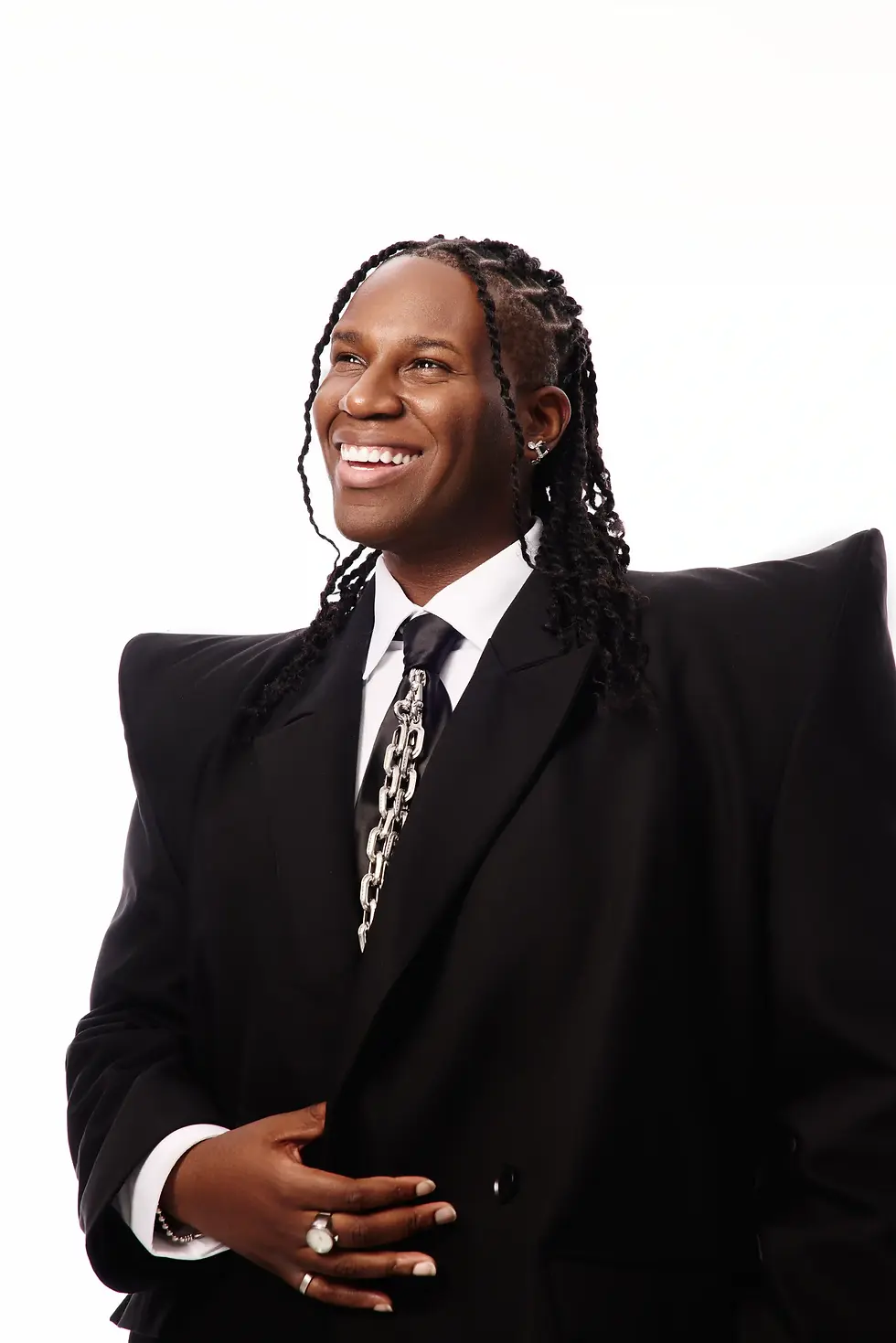
From there, I uploaded a new episode for a week straight, and I saw my episodes go from 0 views to 100,000 views in 2 minutes. Then 1 Million+ in 5 minutes. It was something I’ve never seen before, and in that moment, I knew I had something special. And I’d love nothing more than to take my series to a bigger screen, especially with the demand I already have for it.
You trained as an actor long before your social platforms reached millions of people, and you have described studying sitcoms and physical comedy from a young age. Has building your own characters made you a stronger actor, or has your acting training been the foundation of everything you create online?
A little mix of both, actually. My acting training has 110% made me a stronger actor from a technical standpoint. Studying sitcoms and physical comedy at such a young age made me a stronger writer. I learned the art of comedy thanks to the sitcoms I watched growing up, and it taught me the formula of laughter. The more I wrote my own material, the better I got at it. My professional training helped me not only in performance, but also in learning about the business side as well, which definitely aided in my longevity in this career path.
Across The Shady Family, your fashion moments, and now music, you seem deeply interested in world-building. When an idea arrives, does it usually begin as a joke, a character, an image, or an emotion? And how do you decide which medium, or even platform, is capable of expressing it most completely?
What a beautiful question! Yes, I’m a HUGE fan of world-building, and normally when an idea strikes, I actually think of what it looks like big-picture, then work backwards on the medium. For instance, The Shady Family series started out as a vertical series idea in my head, and I executed that as planned. Then, when it became more popular, I challenged myself to produce it as a full-length series, which I executed as well on YouTube. Now my team is involved in further goals to make this as big-picture as possible.
My Labrinth music project came to mind as a beautiful, stylistically appealing music video to pay homage to Labrinth and Euphoria. Which meant I already knew I had to hire my amazing creative team's production studio to give this the same care it received already. I had to get the big shoes to fill, haha.
“Tití me preguntó…”—and apparently Duolingo had something to say, too. Your Bad Bunny TikTok turned your attempts to learn Spanish into a viral cultural moment, earned a shoutout from Duolingo, and caught the attention of major media outlets. Beyond the laughs, what did the experience teach you about using comedy to bring people into conversations about language, culture, and belonging?
It taught me that laughter brings so many people together. Since I was a kid, I always loved laughter because of how it instantly made me feel. I always say that laughter is present. No matter what anyone is going through in life, laughter forces you to be present in the moment and feel good in your body. You don’t think about bills or an ex that broke your heart. All the overthinking we do vanishes in that moment.
Using comedy to bring people into conversations about language, culture, and belonging allowed everyone watching to put their guard down and laugh. Doing so allowed everyone to enter the comment section with positivity, levity, and love. I also used comedy to show respect and humility, which my newfound family appreciated from the very first second they watched my video.
On a different note, you have described comedy as both escapism during difficult periods and an entryway that helps people lower their guard. Is there ever a tension between being someone millions of people turn to for relief and giving yourself permission not to “perform” happiness? How has that tension shaped the work you make?
It’s something I deal with every day that I’m finally getting a better balance on. Being the people pleaser that I am, I love making my fans happy. But when you have millions of people you try to make happy, you quickly realize how little left you have of yourself. I now give myself breaks and days off to recharge and remind myself why I am the way I am and what my " why " was from the very beginning of my career. It’s actually helped me to make even more content for my fans in a much healthier way! I’m also never afraid to be vulnerable on my platforms and let them know that I’m having a bad mental health day and here’s why. Sharing that alone from a crowd of people who view me as this larger-than-life performer makes them feel less alone and more human. That’s a win-win in my book haha.
Your audience often helps determine which characters, storylines, or ideas receive another chapter. How do you distinguish between listening to the community that helped build your work and allowing algorithms or audience expectations to begin writing the work for you?
I actually took inspiration from Quinta Brunson and her incredible work on Abbott Elementary! I remember she said in an interview that she doesn’t go to social media for storyline development. She keeps that between her and her writers' room to keep the integrity of the story they want to build for the characters, and I loved that!
I have my audience involved with my series with the language they share in the comment section, and I’d play along with it in an episode here and there so it remains a fun inside joke with my community! I feel like understanding your audience's language makes them already feel more connected to the story without fully re-writing the storyline.
We love how your Cowboy Carter Tour looks made fashion feel less like an accessory and more like another form of performance! What can a silhouette communicate about a character, or about you, before a word has been spoken? And has fashion helped you claim parts of your identity that comedy alone could not?
My Cowboy Carter looks showed me firsthand that the right silhouette can speak for you! My stylist, Mickey Freeman, has done an incredible job styling me for the Cowboy Carter tour, and it has turned so many heads that I lost count! I got to meet so many of my fans because of how much I stuck out in the stadium. A follower of mine even commented saying she saw me all the way from the nosebleeds in the 300s section, and I was on the floor!

Fashion has 100% helped me with my identity because it gives me a level of confidence regular O’Neil wouldn’t have. Fashion allows me to tap into the creative personas that I have within and almost becomes an alter ego. I remember strutting in that stadium with so much confidence simply because of what I wore! It made me embody standing out in a crowd of thousands!
You now have an established sketch universe, a background in acting, an emerging relationship with music, and an audience that appears ready to follow you across formats. When you picture the definitive O’Neil Thomas project, is it a television series, a film, a live show, an album, or something that deliberately refuses those categories?
When I picture the definitive O’Neil Thomas, it’s all of those things. It’s a lane I create for myself because I refuse to be one secular thing. I’m a creative anomaly. I see myself as a series regular in a TV series, a Lead in a Feature Film, and touring around the world with the world-building album I’m going to create. I’m practically an EGOT in the making.

The mix of music and comedy in this interview sounds like a fun combination, especially when creative personalities bring their own style to the conversation. That playful energy also fits perfectly with a Dumb and Dumber couples costume.
This content is useful for people who want to become more comfortable with their home router. Anyone researching 192 .168.1.1 can explore information about router access. Understanding configuration pages can help users manage wireless settings and improve their awareness of network security options.
It goes without saying that we had some queries for him. We met O’Neil to discuss stepping out of the shadows of his creations, learning the “formula of laughter” through TV shows, the importance of world building in his work, and how it feels when your dreams transcend the medium you’re working in.
Been trying out Nano Banana for AI image generation lately. You just describe what you want in plain text and it generates something — built on Gemini so the quality is decent. Handles a range of styles from realistic to anime. Useful for quick concept visuals without needing to set up anything locally.
I found the Hindi Vyakaran topic useful for brushing up on the grammar rules I learned in school.