
Fashion Is Exhausting: How Micro-Trends Are Killing Personal Style

You put on something different. Something you actually wanted to wear. You look in the mirror and think, “that’s not aesthetic.” And then you change into a pair of jeans and a tank top. Safe. Familiar. Approved by no one in particular and everyone at once. That moment, quiet and completely ordinary, is where fashion fatigue actually lives.
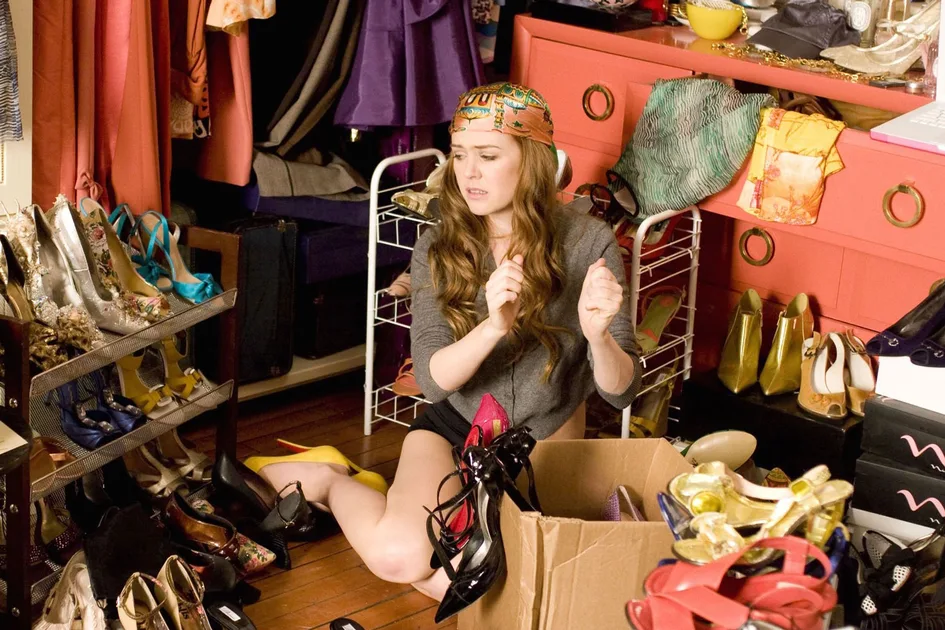
Millions of brands, 4 fashion week months every year, micro trends every month, and hundreds of people telling you what to buy or not buy. It’s tiresome. And then you end up at the same old Zara, H&M, Uniqlo, Westside or whatever your income bracket dictates.
Social media one day tells you to buy polka dots and the next to buy stripes, and now you have both in your closet but don’t wish to wear either. And that’s by definition Fashion Fatigue. Fashion fatigue is the mental exhaustion and disengagement caused by the relentless pace of micro-trends and social media algorithms. Instead of an enjoyable outlet for self-expression, dressing feels like a chore as you’re pressured to constantly cycle through aesthetics.

Before you wrap your head around something, it’s already too done.
Be the it clean girl. Be the pink Barbie girl. Be Y2K. Be cottage core. Be dark academia. Be mob wife.
You are forced to choose and follow. And the cycle moves so fast that by the time you’ve bought in, the internet has already moved on and left you holding a trend it no longer wants.
What does it mean to wear a subculture you have never lived? Is that appropriation, cosplay, or just stripping the context and selling the shell?
The industry preachers need to stop creating boxes and checklists for all of that. For god’s sake, it’s fashion, not maths. It’s supposed to be personal storytelling derived from who you are, not dictated by any particular aesthetic subculture.

These aesthetics are the shallower version of subcultures. Subcultures used to form themselves from movements in the world, expressed through fashion. Punk came from economic rage and alienation. Hip hop style was survival and identity on the street. But the subcultures today are just aesthetics preached, not the essence and life experience behind them. The costume exists. The culture it came from has been edited out.
And in all this chaos, we all admire that one girl who has her own rule book, who is always chic and wears pieces that haven’t come out of Pinterest but are so much more distinctive and make you go wow. But let’s be honest. To be that girl, you are going to have to be the absurd “what is she wearing” girl first, because you won’t learn how to ride a bicycle until you fall off it. The question is whether she is still possible today, or whether the algorithm has closed that window. When everyone sees the same content, is there even a gap left to be original in?
In the middle of last year, what was old was cool again. People were sourcing vintage for its uniqueness, its quiet refusal to be a trend, until thrifting and sourcing vintage became a trend too, and now we are exhausted of that as well.
The paradox of choice, a theory popularized by psychologist Barry Schwartz, explains why. When people are given too many options, they do not feel freer. They feel more anxious, less satisfied, and less confident in their decisions. Now apply that to fashion, where online retail has multiplied options to a scale your brain was never meant to process. The thousands of products, the daily drops, the influencer styling, the micro trends, and
everything in between.

The irony is that the most recognizable personal styles almost always come from slower consumption patterns. Vintage collectors, craft-focused dressers, people who restyle their outfits frequently, or individuals with uniform dressing habits appear more distinctive. Sustainable wardrobes unintentionally create stronger identity signals because they involve creativity, repair, and long-term attachment.
Your voice is hidden behind that of the internet. You put on a new outfit combination, look in the mirror, think “that’s not aesthetic” based on what you saw online or in stores, and change into a safe jeans and tank top.

So the question is: are we willing to slow down enough for our identity to become visible, or do we keep rushing at the same pace? Personal style needs time and an understanding of what works for you. And your uniqueness cannot grow if it is constantly being reset by trends.


I came across this platform while looking for another gaming option and decided to explore it. The register process was easy to understand, and login was clearly placed afterward. I browsed through the available games and checked the download section as well. The website feels fairly organized, and the straightforward navigation made the overall experience easier to follow.
https://chennailug.org/
I really relate to this. It feels like trends move so fast now that it's hard to develop a personal style without second-guessing yourself. Some of my favorite outfits are the ones I've worn for years, not the ones that happened to be trending online. I've found that investing in timeless pieces, like a quality leather jacket from brands such as AngelJackets, helps me focus more on what I genuinely like rather than what's currently popular. Personal style should feel authentic, not like a race to keep up with the algorithm.