
Duncan Joseph Is Ready to Show Us Who He Really Is

Photography by Ben Cope
For years, Duncan Joseph has made a career out of being almost anyone but Duncan Joseph.
There’s Karen, the suburban mom with a complaint ready before she’s even entered the store. There’s Shannon Debussy, the larger-than-life diva whose spirit has somehow outlived the original videos that introduced her. There was Diana Diamond, too, though Joseph informs me, quite solemnly, that she has since passed away. “It was her time.”
The revolving cast of mothers, divas, scammers and cultural archetypes that populate Joseph’s corner of the internet have helped turn duncanyounot into one of the defining comedic personalities of the creator era. Across TikTok, YouTube and Instagram, more than 9.5 million people have followed along as Joseph transforms mundane internet behavior into something increasingly absurd. But lately, there is another character taking up more screen time: Duncan.
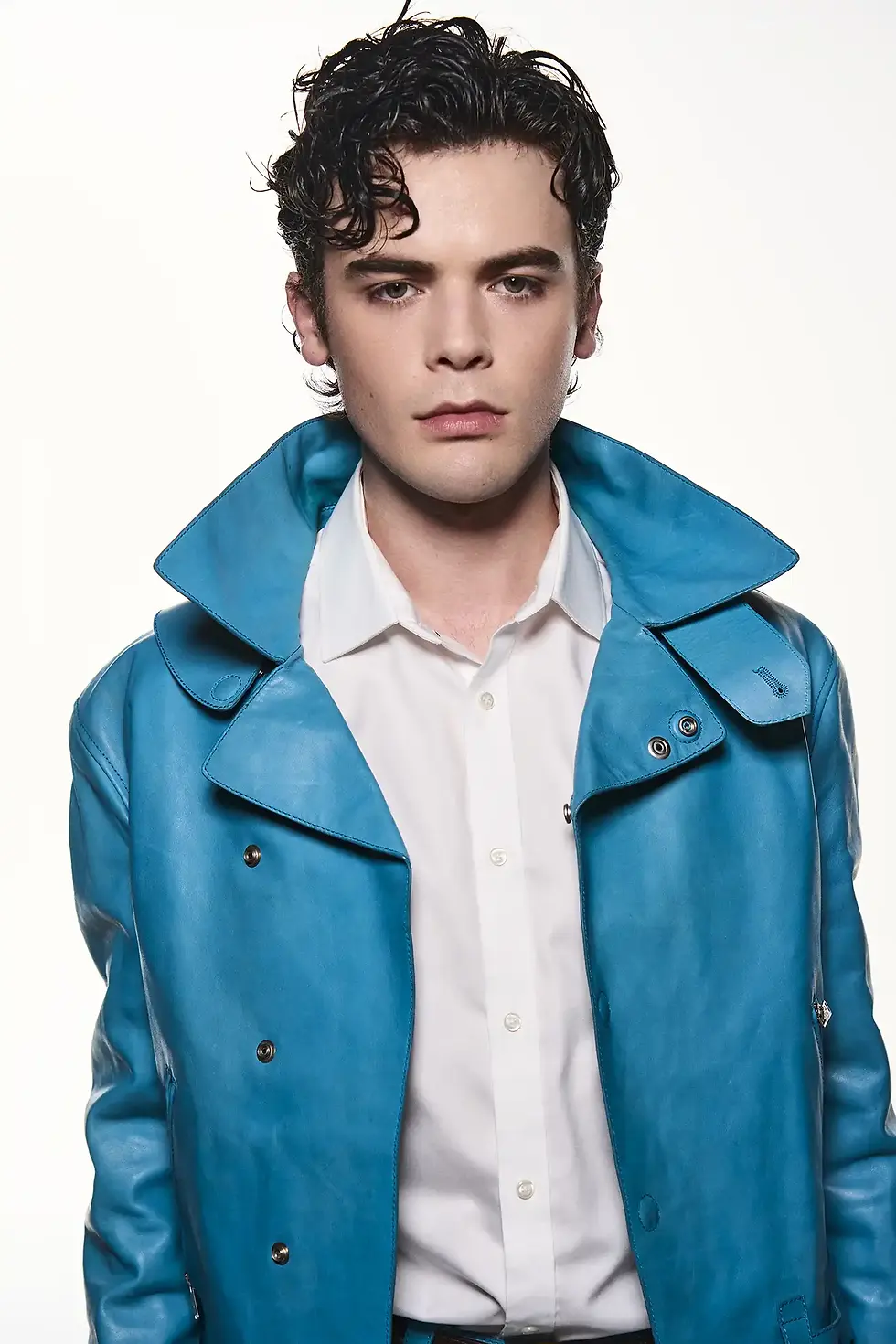
When we connect over Zoom, Duncan is in Los Angeles, though he now moves between there and New York. He grew up in Seattle and began posting seriously during COVID, when TikTok gave his observational humor somewhere to go beyond the homemade skits he had been making with his siblings since childhood.
At least that’s what he gave me when I asked him, quite literally, in true Duncan Joseph form, “Who are you?” (I stole that opener from his Are You Sure YouTube show; you’ll just have to check it out to get it.)
The answer is technically correct. It also seems increasingly incomplete.
Joseph is developing Are You Sure?, his satirical interview show built around intentionally uncomfortable conversations. He wants to act. He wants to write and direct. Fashion has gone from something he once used to avoid attention to something he hopes could eventually become a brand of his own. And after years of placing wigs, voices, and characters between himself and millions of strangers, he is beginning to let the audience see the person underneath all of it.
Before any of those characters existed, though, there was an observer.
LO’AMMI: Were you always someone who watched people really closely? The kind of kid who would notice the way somebody’s mom talked and file it away somewhere?
Duncan Joseph: Yes. I’ve always been an observer. I think it’s really helpful that I’ve been so insecure in the past, because it made me want to people-please. And you gotta read people to people-please. So, I love just analyzing how people talk, the way they joke.
I also just loved playing characters, too. I made a lot of skits with my brother and my sister on my mom’s webcam on her laptop, and we were always doing characters. I think I come from a very goofy family, so it helped me feel confident pretending to be other people and making new ones.
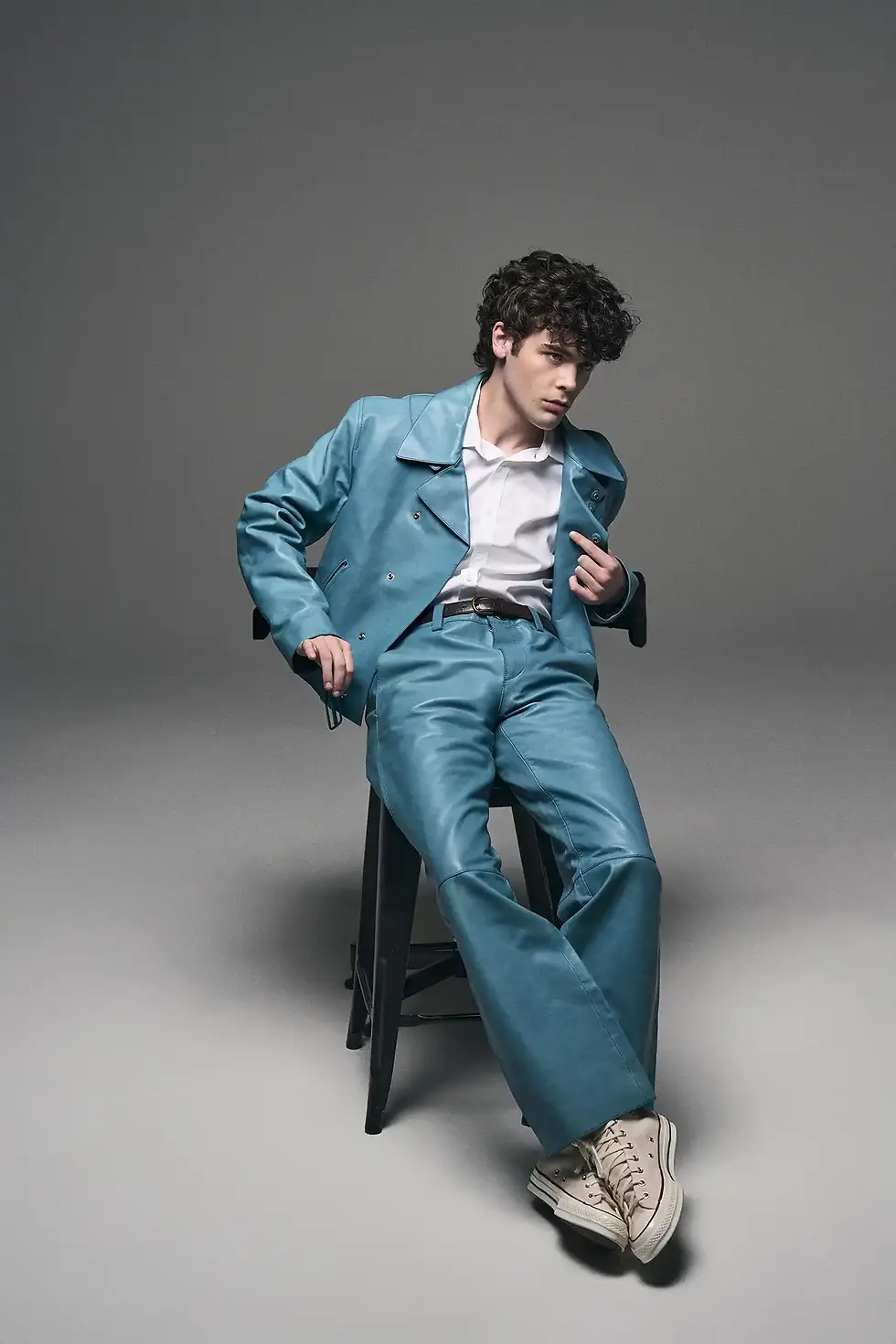
I think also a major voice for me is, you know, the ads you see on the commercial where it’d be like, “Truvada!” Just kind of that really fake voice that I found a lot of humor in: the way media and entertainment kind of talk to the masses. It’s just so dumb. That’s not how a human talks.
There are just certain voices that I’ve heard that I couldn’t stop. Kind of like a parakeet. You play an ad in front of a parakeet, it just can’t stop repeating it. That was basically how my brain worked, and it’s really helped me make videos.
That people-pleasing instinct is an unexpectedly useful origin story for someone whose comedy frequently revolves around people who seemingly have no interest in pleasing anyone.
His characters are exaggerated, confrontational and often shamelessly demanding. Joseph describes himself, laughing, as capable of being “such a diva,” and there is something liberating about becoming a person who can say whatever the actual Duncan might not.
“I think there is always a piece of me in it. I personally can be such a diva, so I think me being this mean diva that gets what they want is that little part of myself that’s just kind of angry. Being this mean, crazy character was honestly pretty therapeutic for me, so I can tell when I was going through it—the Karen meter was kind of through the roof.”
Other pieces came from people around him. Joseph remembers his friend Annie’s Southern mother, Libby, becoming a particular muse. Years later, those impressions have been filtered through Joseph so many times that his characters have developed lives - and fanbases - of their own.
LO’AMMI: Some of these characters have been around long enough that people quote them and have favorites. Do you ever feel pressure to keep one alive because the audience loves them, even when creatively you might be ready to move on?
Duncan: For sure. I think I felt the most pressure when I was just Karen on TikTok. It was 2021. That was what I was known for. I hadn’t even started my YouTube barely yet.
I would try to branch out and post other videos without my wig, and it would be very difficult. People would just only comment references to other videos and not actually what I was making, and it was really annoying.
But I think now that I’ve kind of garnered a more loyal audience, where we all kind of love anything that I make together, it’s given me a lot more freedom.

There are other characters like Shannon Debussy. I made Shannon Debussy three years ago, and it’s still extremely quoted in my comments. I think that’s still really funny, that something I randomly just made up can have so much longevity. I just love looking at the internet analytically, so it’s really crazy to see how she can live on through the spirit of the internet.
Now there’s a lot more freedom that I feel to just kind of do whatever I want.
Freedom, in Joseph’s case, increasingly means appearing without the wig at all.
There was once a practical psychological function to the characters. If someone hated a joke, they were rejecting Karen. Or Shannon. Or whichever exaggerated personality happened to be on screen that day. There was an intermediary between the person pressing upload and the person responding in the comments.
Joseph admits that he needed one.
LO’AMMI: You’ve spent years being incredibly visible while also, in a weird way, hiding in plain sight. Is being on camera simply as Duncan more vulnerable than putting on a wig and doing something completely unhinged?
Duncan: For sure. Honestly, if someone were to hate my videos or critique a joke, those characters almost felt like a boundary between me and those comments, so it wouldn’t hurt me as much, because I’ve been very sensitive. It just made a lot more sense for me to pretend to be other people, because that just helped me cope with anything people could say about me.
Throughout the years, it’s gotten a lot better. I’m a lot more confident now. But that was definitely a habit of mine. I never really did a story time about my day or made jokes about my personal life, because that was definitely too vulnerable.
But now I feel like I have the confidence to do a Q&A on YouTube now, which I would never have done. So I’m excited to show people more of me.
If the wigs once offered protection, clothes eventually became a way of doing precisely the opposite.
Joseph can remember a version of himself whose wardrobe consisted largely of quarter-zips and skinny jeans. It wasn’t really just an aesthetic choice. Looking back, he sees it as an avoidance of self-expression, a uniform designed not to invite too much interpretation.
Then came the experimentation.
There was TikTok fashion. There were intentionally out-there looks. There were quieter phases. At the Louvre in Paris, there was a denim maxi skirt paired with a fur-trimmed leather vest, a look Joseph now jokingly describes as something of a protest against being perceived at all.
“I’ve gone through so many phases of my fashion,” he says.

The irony is that creating people who were impossible not to notice eventually helped Joseph become more comfortable being noticed himself.
LO’AMMI: When you’re putting a look together now, are you dressing as Duncan, or is there still a little character-building happening?
Duncan: Now I think I’m dressing more as Duncan. There are so many phases of my fashion. Honestly, when I grew up, I literally wore quarter-zips with skinny jeans, and that was it. I did not want to show any self-expression.
These characters have given me a lot more confidence to be like, wait, actually, it is fun to put on an outfit and have that be part of your story.
I would love to start some sort of fashion line in the future. I don’t know how. I’m trying to decide if I want it to be taken seriously or not, because at the end of the day, fashion should be fun. I’m no dedicated, crazy designer who knows all the history. I’m not saying I’m one of those people, but I do know what I like now, and I do know what is fun.
I’m excited to see what could happen in the future with that, but keep your eye out.
His current “You Can’t Arrest a Diva” merchandise offers an early glimpse at where that thinking could eventually go. Strip away Duncan’s name, the existing characters, and the catchphrases, I ask, and what would make clothing unmistakably his?
His answer comes almost immediately.
“There needs to be a little wink-wink, nudge-nudge in the small details. Maybe some funny saying in the stitching, or just materials that you’re kind of like, ‘What?’ But you put it on, you’re like, ‘Wait!’ So, I think if the clothes give ‘What? Wait,’ then I think we’ve found it, because that’s what I give.”
That combination—What? Wait.—could just as easily be the creative brief for Are You Sure?
The show is Joseph’s newest playground, an interview format where being a terrible interviewer is precisely the point. Guests arrive for something resembling a normal conversation and are instead subjected to games, deliberately strange questions, and whatever experiment Joseph has decided to try that day.
The first episode with TaraYummy established the rules, or rather, the absence of them.
LO’AMMI: What actually makes somebody a great guest for Are You Sure?? Do you want somebody who plays along, somebody who fights back, or somebody you can manage to break?
Duncan: I want it all. I don’t think there is a perfect guest, because it is so uncertain.
On one hand, you have the guest that has no idea what’s going on, doesn’t really realize that this whole thing is a joke, and that is just as entertaining as someone that can fight back and bounce back.

It’s honestly just an experiment to see how someone can handle the stress of the show.
I wouldn’t say there’s a perfect guest. I think I have fun with anyone. I mean, I wouldn’t want someone who’s quiet or shuts down, but maybe just someone who rolls with the blows, because I’m not out there to get them or to be like, “Gotcha.” It’s just supposed to be incredibly awkward. So, as long as it’s incredibly awkward, we both won.
Calling it an experiment is fitting, because Joseph is quite literally figuring out portions of the format while making it.
Only a handful of segments have been repeated from episode to episode. Most are test runs. One recent blind-ranking game became so elaborate that filming the segment alone stretched to roughly 45 minutes, forcing Joseph to reconsider whether every idea needs to become, in his words, “a movie in and of itself.”
That uncertainty is part of the premise.
“They don’t know what’s gonna happen, and half the time, I don’t know what’s gonna happen,” he says.
What Joseph does know is that he wants the series to become somewhere guests enter his universe rather than another standardized stop on a promotional circuit. The eventual ambition stretches beyond fellow internet personalities to actors, musicians, designers and people throughout entertainment.
And anyone arriving armed with media training may be out of luck.
“I think the difference between other shows and this one is that PR training can’t save you. I don’t think even the PR trainer will know what to respond with. Honestly, I think it’s fun that in these games, I hold all the variables. I’m the one that’s in control of all of it. And I think that’s quite scary, but that’s how they enter my world, because I will win every game, I will know every answer, and I will ask every question. And you just have to sit there and listen.”
He laughs. He’ll still let the guests promote whatever they came to promote.
Just “only for a second.”
For all the deliberate chaos surrounding Are You Sure?, Joseph talks about what comes next with considerably more clarity.
TikTok was the beginning. YouTube gave him room to stretch. Hosting provides another format to experiment with. Fashion is another language altogether. But when asked to imagine meeting someone five years from now, at a point when “TikTok creator” may no longer be the first descriptor attached to his name, there is no hesitation.
Actor. Writer. Director.
LO’AMMI: If we jump ahead a few years and “TikTok creator” is no longer the first thing someone associates with Duncan Joseph, what would you love for them to say instead?
Duncan: I want it to be actor. I want it to be writer. I want to be able to self-produce short films and projects, and maybe even feature films in the future, because I have so many ideas, and just on TikTok and YouTube isn’t enough.
It’s so great. It’s super fun. It’s a great stepping stone. But I just get so wrapped up in it; honestly, it feels like my head’s about to explode, because there are so many ideas in here, and I just wanna let it out.

I am just excited for, in five years, when people come up to me, and they’re referencing all the things that I have in my head right now. Whether that’s something I write and I’m acting in, or something I’m directing, or honestly just some character I’m playing in a friend’s project.
“I just want people to see that other side of myself, because the moms are great, the interview show’s great, the YouTube’s great, but it’s really just like 5% of what I think I’m capable of. I’m just really excited for people to see that part. You know, it’s not gonna be easy, but I’m ready for the challenge.”
The interview technically ends there, but we kept talking anyway.
He mentions that in high school he did mock trial, speech and debate. He was, as he describes it, “such an extracurricular kid.” Interviews give him the opportunity to engage a part of his brain he doesn’t always get to use while reacting to mothers yelling in stores on YouTube.
It’s an almost throwaway revelation, but it makes something about Joseph click. Beneath all the wigs and voices and deliberate absurdity is someone who genuinely enjoys thinking through an idea, testing it, performing it, picking it apart and trying it again in another form.
Maybe duncanyounot was never really about hiding Duncan Joseph. Maybe it was simply the practice that made perfect.


This is an interesting discussion for anyone exploring related information online. I found the explanations straightforward, and the reference to joya 9 was relevant to what I was researching. The article adds enough background to make the subject easier to understand instead of simply presenting isolated information.
In Build Now GG, I entered a six-player match and avoided the center at the start. By the time the crowd thinned out, I had a much better chance in the remaining fights.
Been browsing Poki Games when I need to unwind after long study sessions. They organize everything by category which makes it easy to find something that matches your mood. The multiplayer section has some surprisingly fun stuff too.
More on bombas phone number I had to reach out to customer service, and honestly, it was a breeze! They were super friendly and really took the time to help me with my issue. I felt like they genuinely cared about my experience, which is rare these days. Plus, my replacement socks arrived way faster than I expected! Overall, I’m really impressed with how they handle things.