
Alfred Jackson on Cocoon, Self-Love and Creative Freedom

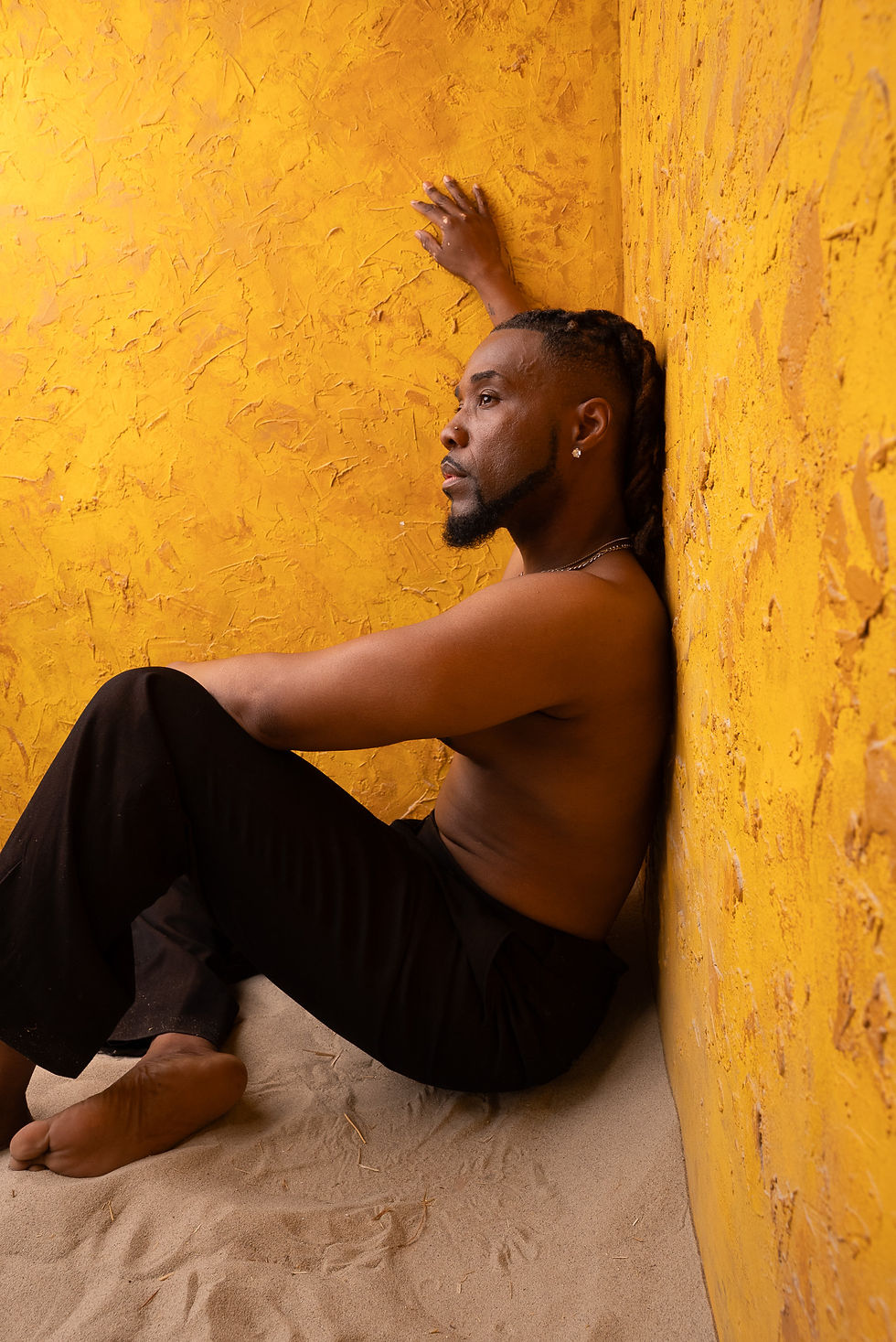
Photography by Ricky Dorn.
For Alfred Jackson, music has become the place where performance gives way to something more personal. After years spent moving between theater, film, choreography and recording, the South Central Los Angeles native is entering a chapter defined less by expectation and more by freedom: the freedom to create on his own terms and let audiences see the person behind the performer.

With his new album Cocoon, Jackson turns inward, using music to process love, pain, identity and growth while embracing the artist he has worked toward becoming since childhood. In conversation with LO’AMMI, he reflects on unlearning industry pressures, protecting his creative joy and what it means to finally build a career around the music that has always been at the center of his life.
You grew up in South Central Los Angeles and started pursuing entertainment incredibly young — you’ve spoken about signing your first record deal at just 14. When you look at the Alfred who was entering the industry then versus the artist you are now, what parts of him are still with you, and what have you had to unlearn along the way?
I think the part of that 14-year-old Alfred that’s still very much with me is the dreamer in me. I’ve never been someone who thinks small. I’ve always believed that there was something bigger for me, and I still carry that same belief today.
What I’ve had to unlearn is thinking that everybody is going to see your dream the way you see it—and the way you and God see it. They may not understand the vision, and they may not be able to come on the ride with you. And I’ve had to learn that that’s okay. It doesn’t mean the dream isn’t real. It just means it was given to you, not necessarily to everyone around you.
I think that’s one of the biggest differences between the Alfred I was at 14 and the Alfred I am today. I still dream big, but now I understand that I have to trust the vision even when other people can’t see it yet.
You’ve talked before about experiencing body-shaming and having labels and producers come in with their own ideas of who you should be. Then you created U.G.L.Y. — Ur Greatest Legacy’s You — an album centered on knowing your worth and owning who you are. Was there a particular point when you realized you were done allowing other people to define what Alfred Jackson was supposed to look or sound like?
I think that shift really happened after I moved to Japan. Living there opened my eyes to the fact that there was so much more to life than trying to fit into somebody else’s idea of who I was supposed to be.
For years, I cared so much about what labels and producers wanted from me—what they wanted me to sing, how they wanted me to dress, even how they wanted me to present myself. But living in Japan gave me the space to express myself as an artist and really understand that no one’s opinion of me matters more than my own. Because if I don’t love myself, how can my light truly shine?
I also realized that if I keep pretending to be what other people want me to be, the fans I dream of having will never really get to see me. They’ll only see a version of me that I created to please somebody else.
When I look at artists like Janet, Prince, and Michael Jackson, they were unapologetically themselves. They didn’t change who they were to make everyone comfortable. They brought their art, their magic, and their individuality to the world—and people either came to the party or they missed out.
That’s what U.G.L.Y. really became for me: understanding that my greatest legacy isn’t becoming somebody else’s idea of an artist. It’s becoming fully myself.
There’s something interesting about the word “legacy” in the title, because we usually think of legacy as what remains after us, while U.G.L.Y. almost turns that inward and says the legacy is the person you become. What does “your greatest legacy is you” mean to you now, several years after making the album?
What matters most to me is what I leave behind—how I’ve touched people through my music, or inspired them through my journey of becoming the multifaceted artist. I am in control of my destiny and my truth! It’s more than music—it’s my life!
My legacy is not perfect. I am flawed in the most perfect way. I will make mistakes. I will create music everyone may not like, but however I’ve touched you in this life is my legacy and imprint on this world.
The world may not know my name, but the thousands of people who have encountered me on some level—from the stage, to a friend, to a mentor, to a vocal coach, to a dance instructor—they know my name. And that’s how I’ll always live on.
You’ve spent much of your career inhabiting other people’s stories — whether it’s musical theater, film, choreography, or currently performing in Hell’s Kitchen. Your own music asks you to do almost the opposite and reveal yourself. Is being Alfred Jackson the recording artist actually more vulnerable for you than stepping into a character onstage?
Releasing my own music is definitely more vulnerable for me because I believe in truth and experience. That’s where true music lives. We’ve always used music to reflect what we’re experiencing in the world, whether it was the pain and struggle surrounding war and the civil rights movement in the ’60s and ’70s, or what we’re going through today.
For me, writing about having my heart broken over and over again can be embarrassing. But it’s my truth, and I know I’m not the only one who has experienced it. That’s what makes it worth sharing.
With this new album, Cocoon, I wanted to take that pain and turn it into hope. So when I write a song like “Manifest,” where I say, “Tired of singing these sad, beautiful love songs. Think it’s time to switch that shit up. Manifesting my love, I’m manifesting my true love,” that’s me being honest with myself and with my listeners. Or with “Cocoon,” which is really a letter to my mom, my dad, and myself. I’m exposing the reality that my relationship with my father doesn’t exist, while also allowing my mother to tell me that she’s proud of me, even if the life and love I chose wasn’t necessarily the life she envisioned for me.
That’s something I think true artists have to be willing to do. Music is our outlet. Of course, diving deep into a character for a play is work, and it takes me somewhere because I have to understand who that person is. But when I’m making my own music, there’s nowhere to hide. As long as I can make music, you’re going to witness my struggle, my joy, my confusion, my pain, and my hope for where we are in the world right now. That’s Alfred Jackson.
You’ve had an unusual vantage point on music: you’ve worked as a vocalist around people like Diane Warren, Rodney Jerkins and Brian Michael Cox, while also building an independent career of your own. After seeing how major records and artists are developed from behind the scenes, what did you ultimately have to stop listening to in order to discover what your voice sounded like?
Once I blocked out the noise of trying to create a hit, trying to have the best image, and trying to do what was hot in the moment, I found peace. More importantly, I found my creative joy again.
In my experience with labels, there were times when the process became so focused on creating what they thought would work that they stole the joy out of creating for me. They didn’t always understand the artist or really hear the artist. And I think that’s dangerous, because the joy is part of what makes the art special. How can we make this better and still allow you to have fun while creating it?
The truth is, no one knows what a hit song is until it becomes a hit. You can create a song and believe in it completely, and then have a room full of people picking it apart based on what they think the market wants. But I believe that if you’re having a great time creating a masterpiece, people can feel that. There’s an energy that comes through when an artist genuinely loves what they’re doing.
And I want to be clear—I don’t believe every label experience is like that. Some artists are blessed to have someone in their corner who truly believes in them, understands their voice, and knows how to help them get the best out of their art. I think that’s the relationship every artist hopes for.
Now I have a circle of people I trust who will be honest with me, even when it hurts. But their honesty isn’t, “This isn’t a hit record.” It’s more like, “I think you can say that differently,” or, “I feel like this song still needs more story.” That kind of feedback challenges me without taking away my creative joy or making me feel like I have to become somebody else.
I think that’s what I ultimately had to stop listening to—the noise. The pressure to be a certain image, sound a certain way, or chase whatever is hot in the moment. Once I stopped listening to all of that, I could finally hear myself.
Your career has never really fit into one box — actor, singer, writer, choreographer, director, producer — but it feels like there’s a renewed intention now around Alfred Jackson the recording artist. After everything you’ve accomplished onstage and onscreen, what are you still trying to prove to yourself through music, and what do you want this next chapter to reveal about you that audiences haven’t gotten to see yet?
I’m no longer trying to prove anything to myself. At this point, it’s more about completing what 9-year-old Alfred dreamed of. That’s the mission. And honestly, I’ve already accomplished more than that little boy could have ever imagined.

But the mission now is to be able to travel the world singing my music on tour, hear people singing those songs back to me, and ultimately be able to make a living from my music without having to rely on all of my other gifts and jobs as the side hustle. I want the music to be the thing that sustains me. So I guess, in a way, proving it isn’t about whether I can do it anymore—it’s about seeing the mission through.
What I want this next chapter to reveal to my audience is that I no longer live for anyone’s approval. I’m free from that, and life is so much better on the other side of that freedom. We can’t live our lives for our parents, our friends, or anybody else’s idea of who we’re supposed to be, because there’s no life in that.
Cocoon takes you on a journey through my thoughts. It’s almost like a journal. You’re hearing me process my life, my relationships, my pain, my growth, and ultimately my hope. And now I feel like I’ve come out of that cocoon as this butterfly who really loves Alfred Jackson—and loves love, because I believe love is the most powerful thing in the world.
That’s what I want people to see in this next chapter: a man who is free to be completely himself, who loves who he is, and who is finally ready to let the world experience the music that has been living inside of him all along.


Comments