
Before Sustainability Had a Name, by Alina Stanila
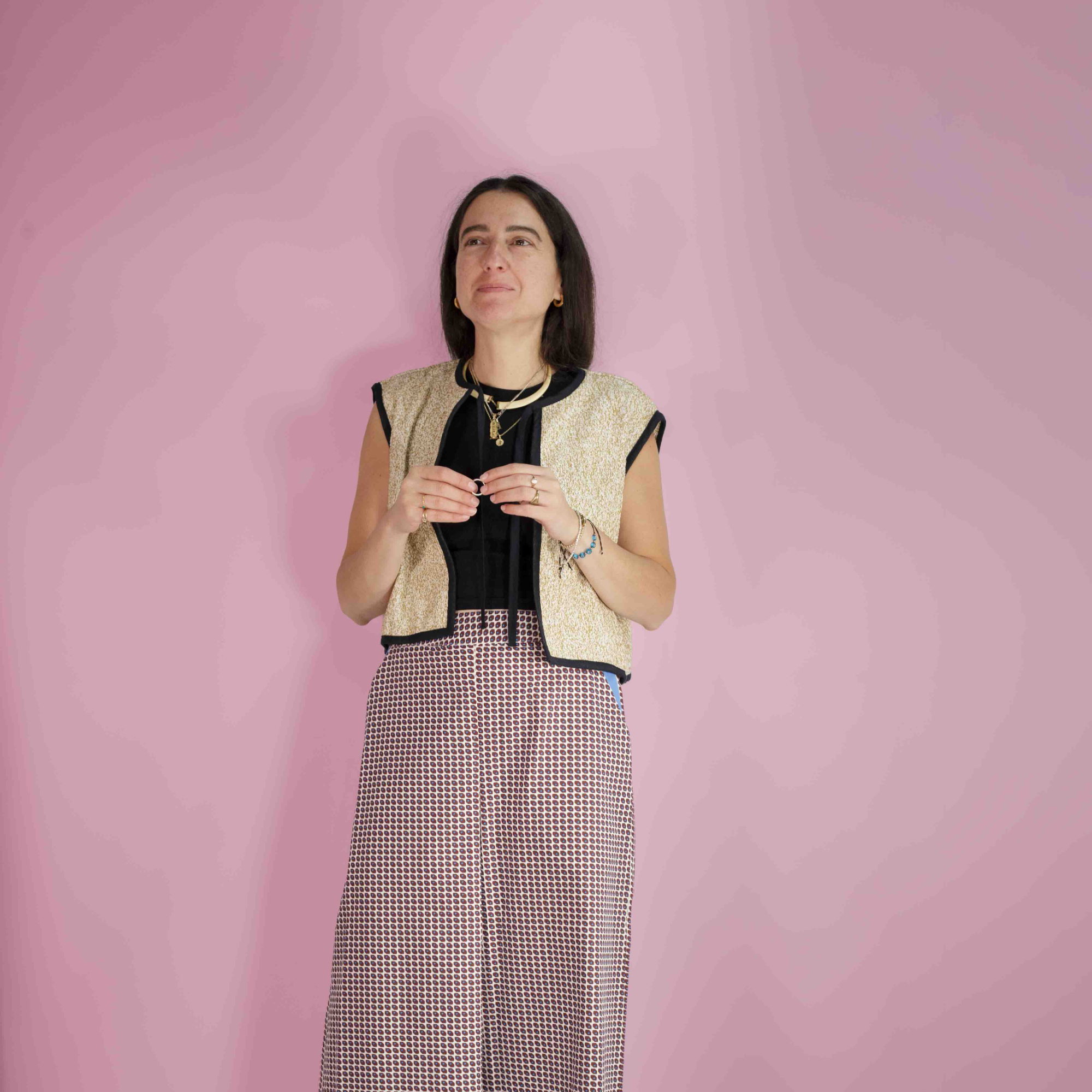
Long before I became a fashion designer, and long before sustainability became part of the fashion industry’s vocabulary, I was fascinated by a tailor.

His workshop was a tiny room at the bottom of a block of flats. I remember the sound of the sewing machine, the pieces of fabric scattered around and, most of all, watching him make suits.
How could something completely flat become something three-dimensional, shaped around a human body?
It fascinated me.
A piece of cloth could become a jacket, a pair of trousers, an entirely different silhouette. And once worn, that garment could change the way someone looked, carried themselves or even felt.

There was something extraordinary about that transformation. The confidence a beautifully constructed garment could give someone. The personality it could express, sometimes without a single word.
I didn’t know it then, but that curiosity would stay with me.
My understanding of sustainability came from somewhere else entirely.
When resources are scarce, you learn to value them. Not because someone tells you to be environmentally responsible, but because throwing perfectly useful things away simply doesn’t make sense.
Clothes were repaired, altered and handed down. Wool was unravelled and used again. Fabric scraps became something else.
L-R: Continuum Black Silk Engineered Knit Gown, Veil Open-Back Mesh Corset Knit Dress, Asymmetric Satin Viscose Jacket & Half Skirt. Courtesy of Mystic Moods.
I remember my mother bringing home a sack of lamb’s wool from the countryside. We spent hours removing straw and burrs, separating and preparing the fibres until something rough and tangled became soft enough to make a duvet.
We weren’t making an environmental statement. We were making something useful from what we had.
Perhaps sustainability is best understood when resources are scarce, rather than when everything feels endlessly available and disposable.
When Less Becomes More
Years later, while studying fashion, I encountered sustainability as a formal design concept.
For one project, we were challenged to work entirely with existing materials. I collected shower curtains, blackout curtains and discarded mesh from recycling centres and charity shops.
They weren’t conventional fashion fabrics, but that was precisely what made the exercise interesting.
I began cutting, unpicking, reshaping and experimenting.
It reminded me of something familiar. The freedom of creating with whatever was available.
What had once been a necessity was now being described as innovation.
And perhaps that is where some of our most interesting ideas begin: not with unlimited choice, but with the challenge of making something work.
L-R: Anna Mini Bag Grey, Melisa Ribbon Clutch Bag, Maria Clutch Bag Grey. Courtesy of Mystic Moods.
That thinking eventually found another expression in my engineered knitwear.
Instead of knitting lengths of fabric and cutting garment pieces from them, I explored constructing garments from individually engineered geometric panels, knitted directly into the required shapes.
Each section had to be considered as part of the whole. Flat shapes became three-dimensional structures, assembled by hand and developed directly on the mannequin.
Some became elaborate gowns.
There was no conventional fabric-cutting waste, although sampling, yarn ends and finishing still required resources.
But the most exciting part wasn’t simply reducing waste.
It was discovering what became creatively possible when the construction itself dictated the design.
It required technical understanding, experimentation, patience and skilled hands.
And that is something I feel strongly about. Reducing material waste doesn’t necessarily reduce the work involved. Sometimes it demands considerably more imagination and craftsmanship.
The Waste We Don’t See
Today, we often associate fashion waste with overflowing wardrobes, discarded clothing and mountains of textiles in landfill.
But waste begins long before we buy anything.
According to the European Environment Agency, the European Union generated approximately 6.94 million tonnes of textile waste in 2022 — around 16 kilograms per person. That figure includes clothing and other textiles. It is a staggering amount, but numbers alone cannot show the creativity, labour and resources that went into producing those materials in the first place.

It begins with the materials we produce, the fabric discarded during cutting, the samples that never become garments and the enormous quantities of clothing manufactured without knowing whether anyone will actually wear them.
We have created an industry where abundance is expected and newness is constantly encouraged.
Yet every material has required resources, energy and human labour before it even reaches the cutting table.
Recycling matters, but shouldn’t we also be questioning how much waste we create in the first place?
And what if the answer isn’t always another material, another technology or another collection?
What if we simply learn to look differently at what already exists?
The World of Mystic Moods
This is part of the thinking behind Mystic Moods.
We work with deadstock, surplus and other selected fabrics, creating garments in limited quantities in England.
Sometimes the material comes first.
An unexpected texture, a beautiful print or a limited length of fabric can suggest an entirely different direction.

I enjoy that unpredictability. It keeps the design process alive.
Mystic Moods isn’t built around collections. It’s built around a continuing design language, where different pieces, fabrics, colours and ideas coexist.
There is no need for everything to belong to one season or follow one aesthetic.
Fashion, after all, is about individuality.
When I look at my work as a designer, from engineered knitwear and three-dimensional gowns to the pieces we create at Mystic Moods, I see a continuing fascination with form. Sculptural shapes, unusual proportions, movement and the personality a garment can bring to its wearer have always mattered to me. The materials and techniques may change, but the desire to explore what clothing can become has remained. I would never want the conversation about waste to overshadow that creative work; the two belong together.
Of course, working this way comes with commercial realities. Fabrics may not be available again. Patterns need developing, samples need making and skilled manufacturing has a cost.
Producing fewer garments doesn’t necessarily make each garment cheaper to create.
But these are considerations worth having if we want to build a different relationship with fashion.

And that relationship shouldn’t end at the point of sale. Our customer app extends the conversation through garment information and guidance on care, repair, donation and recycling.
Because what we do with clothing after buying it matters just as much as the decisions we make before producing it.
Fashion Must Still Be Fashion
I don’t believe sustainability should become a design aesthetic or a marketing label.
And I certainly don’t believe fashion should lose its imagination in the process.
Fashion should be beautiful, strange, expressive, experimental and sometimes completely unexpected.
A garment should make someone feel something.
That fascination I had watching a tailor transform flat fabric into a suit has never really disappeared.

Neither has the understanding that materials have value, regardless of whether they are new, old, abundant or scarce.
Perhaps the future of fashion lies somewhere between those two ideas: the freedom to imagine and the responsibility to value what we use.
Because creating something extraordinary doesn’t always require something new.
Sometimes it simply requires seeing what is already there differently.
Wear More. Waste Less. Love Longer.


Comments